How to lay bricks correctly: preparatory work
.jpg)
Before starting any construction work, it is important to carry out design and make correct calculations. A plan with exact dimensions and diagrams of the walls or structure must be drawn up - it will prevent errors in the future during masonry. It is important to calculate the number of bricks in advance, taking into account that approximately 400-420 bricks of standard shape must be used per cubic meter of masonry. The consumption of mortar for masonry requires an average of 0.22 to 0.25 m³.
Preparatory work also includes laying the foundation and leveling the base. It is equally important to pay attention to waterproofing. Before starting work, waterproofing material must be laid and the necessary tools selected. The list of mason tools includes a trowel, bucket or other container for mortar, building level, rubber hammer, shovel, tape measure, and a special jointer for joints.
How to lay bricks: process features
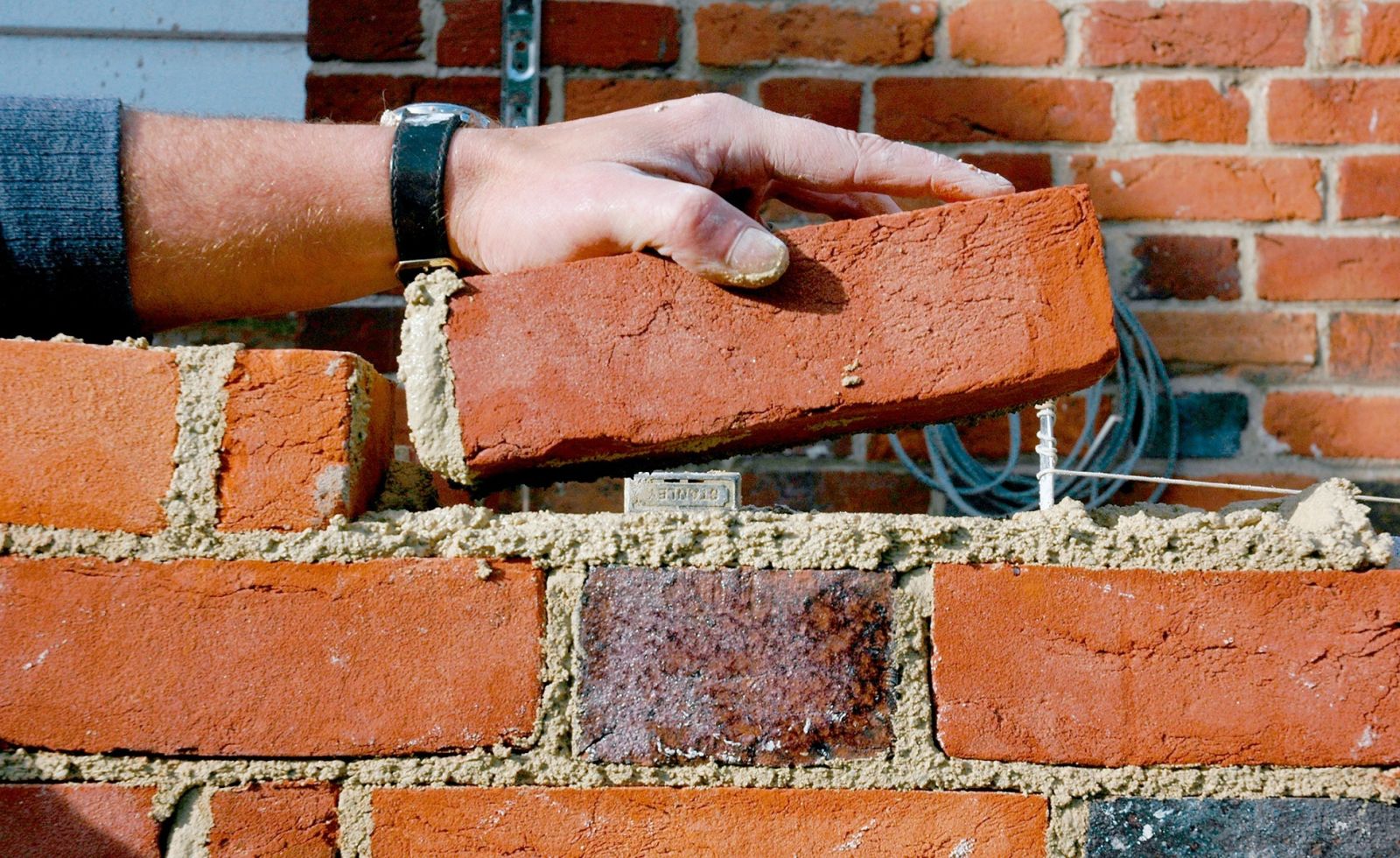
For work, it is necessary to prepare the material itself and the cement-sand mortar. The proportions of the mortar depend on the brand of cement and the purpose of the building. The classic option involves a proportion of 1:3 or 1:4 of cement and sand. In this case, it is worth following the following tips:
- the sand must be sifted - without pebbles and debris and various impurities;
- the main components must be mixed in a dry state;
- water is added to the mixture gradually, with thorough mixing;
- the finished mortar must have a plastic consistency, but must not spread over the surface.
The bricklaying process itself should take place in warm weather. If it is necessary to carry out work at low temperatures, then in this case experts recommend using special antifreeze additives.
Bricklaying technology: what to pay attention to
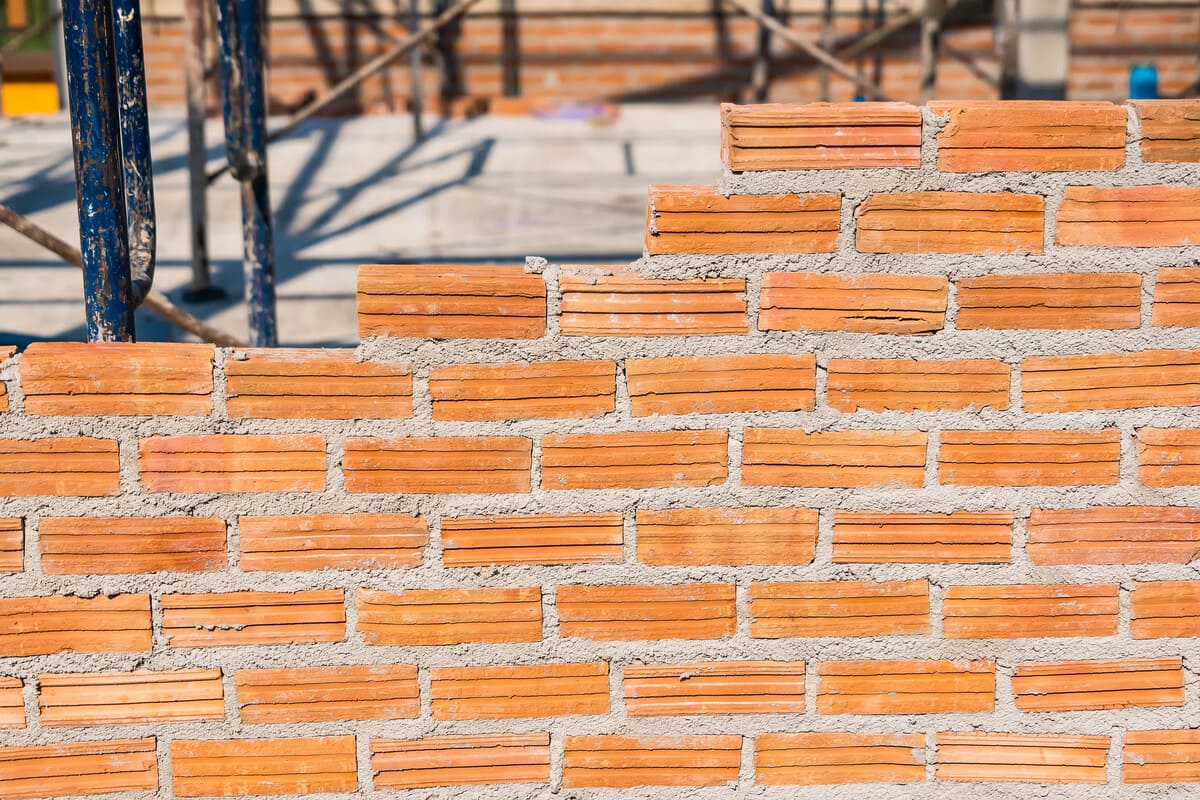
The process of laying bricks is as follows:
- marking the future building - the corners and boundaries of the walls are determined;
- the first row is laid dry without mortar to check the integrity of the pattern;
- laying bricks on the mortar begins with corner bricks using a level;
- to control the height between the corner bricks, a cord is stretched, which will indicate the upper part of the row.
The corners are formed using special beacons. Controlling the vertical line involves the use of a laser level and a rule. The mortar is applied with a trowel, observing the thickness of the cement layer seam of about 10-12 mm. The brick is leveled with light blows of a mallet horizontally and vertically. It is imperative to monitor the uniformity of all seams.
Taking into account the brick dressing system, it is worth noting several types of brickwork - single-row, multi-row and three-row. The first option involves laying in one brick. In this case, its length will determine the thickness of the wall - usually 250 mm. Half-brick masonry provides a thickness of 120 mm, a three-row format can have this parameter up to 640 mm.
DIY bricklaying: how to prevent mistakes
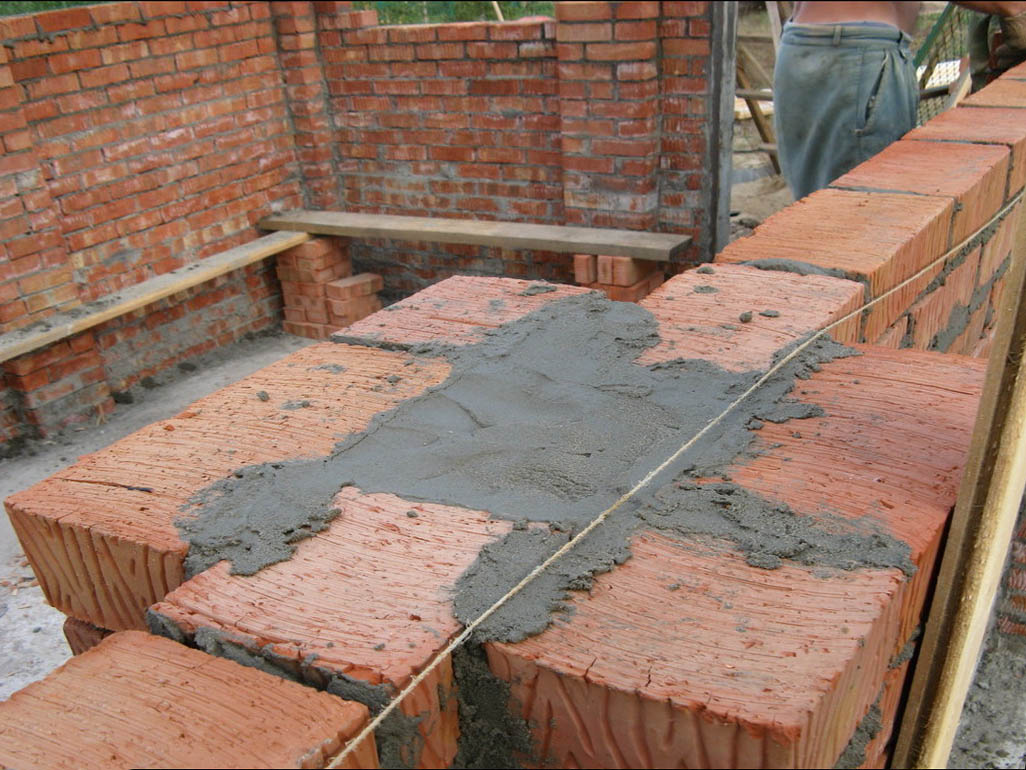
Advice on masonry walls from experienced craftsmen includes the following points:
- to maintain evenness of the seams, it is necessary to use templates;
- a level and a special cord will help to monitor the evenness of the horizontal direction;
- before starting work, it is necessary to lay a waterproofing layer;
- the solution must be prepared with mandatory observance of the masonry technology.
It is important to use personal protective equipment during work. When laying bricks at a height, it is necessary to prepare scaffolding or specialized building structures in advance. It is recommended to store the materials in a dry place, the bricks must be laid in even rows.