What is machine plastering: the specifics of the process
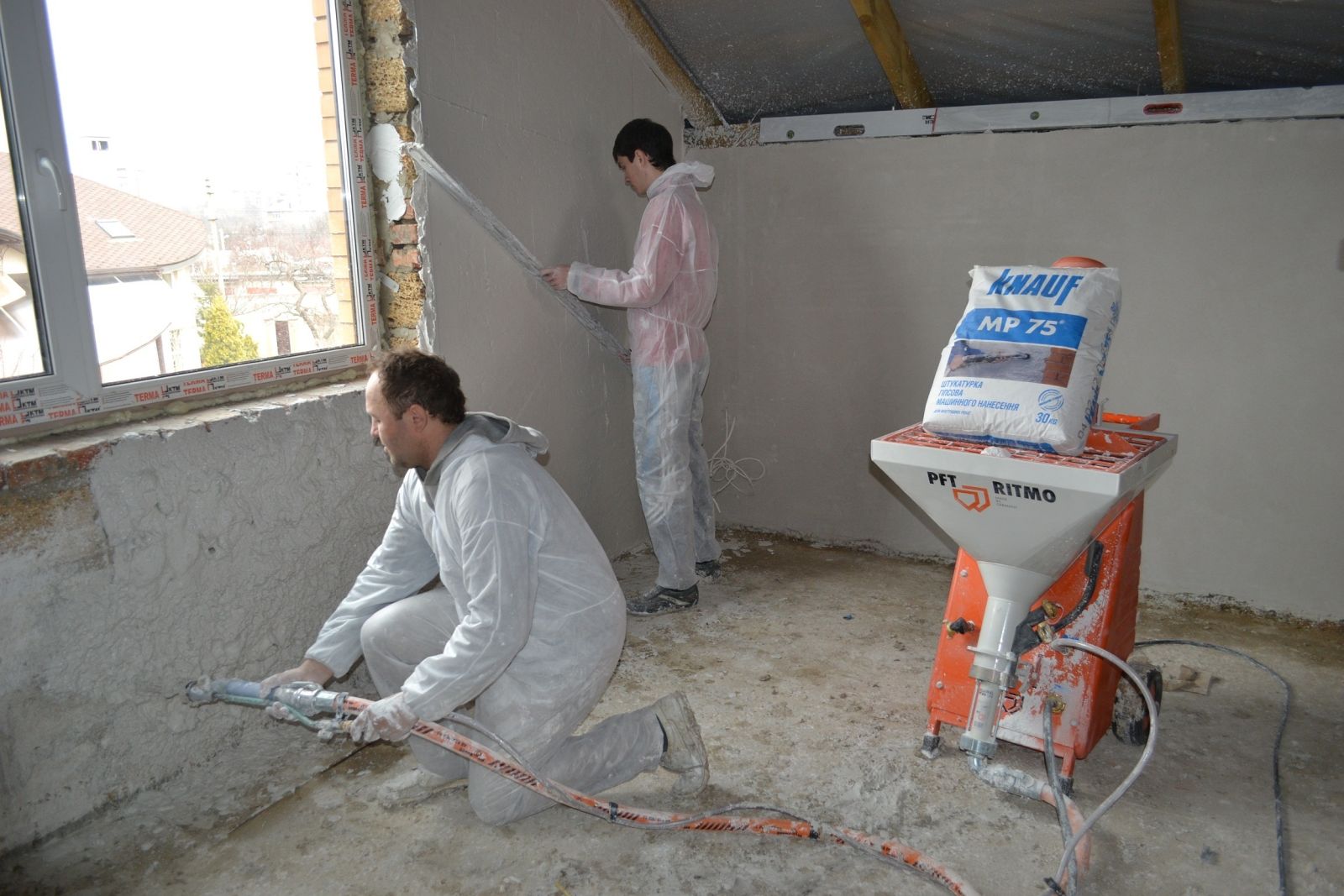
This method involves leveling the walls while applying the plaster mixture to the surface using a specialized machine. The basic principle also involves automated mixing of the components for the mixture, namely:
- Dry building mixtures are poured into the machine's hopper;
- A mixer mixes them with water, creating a uniform consistency;
- The finished material is delivered through a flexible hose using a mortar pump;
The gypsum mixture is applied using a special gun, which can regulate the force of the automatic mortar feed.
This method is radically different from manual application, requiring less physical effort and only one person to complete the job.
How machine plastering is done
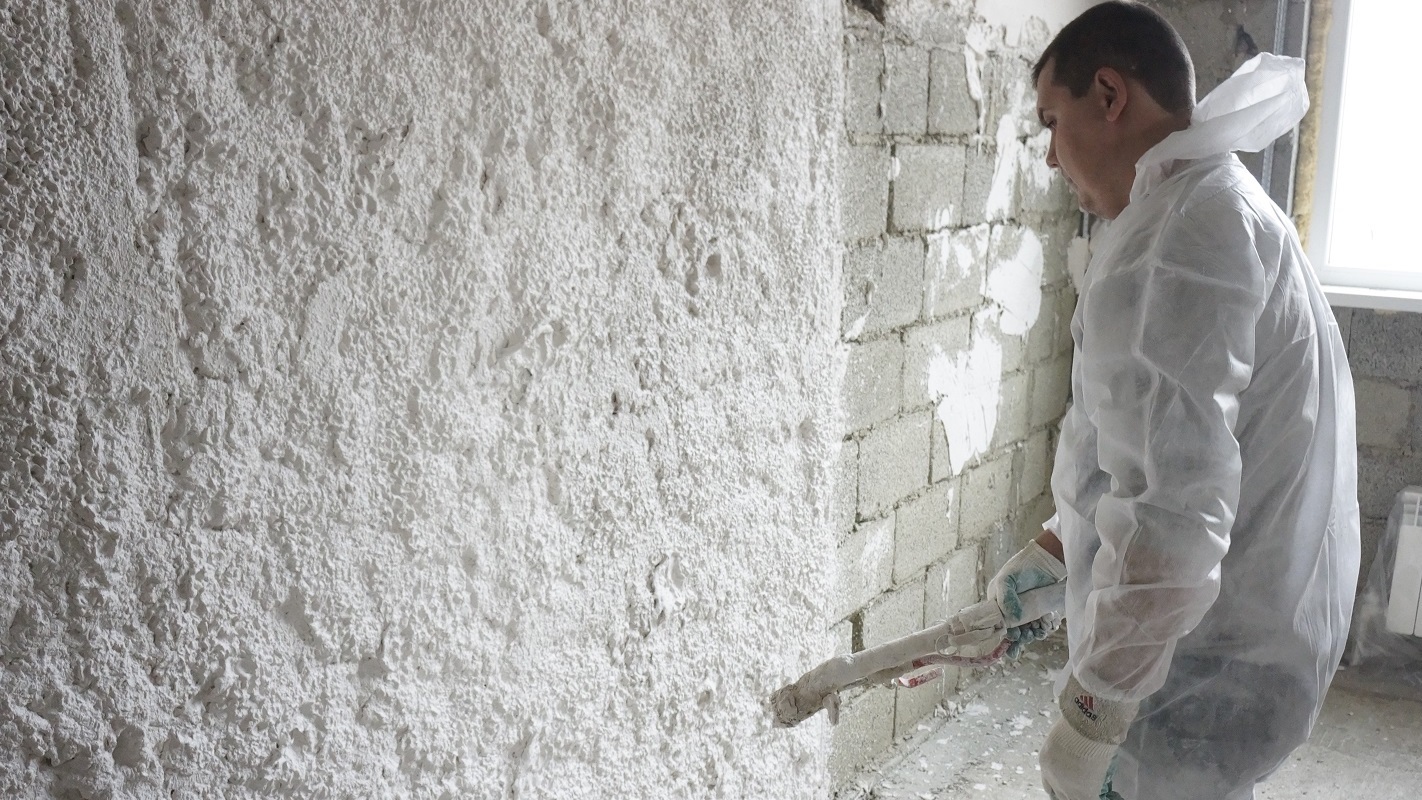
The specifics of this type of plastering are as follows:
- substrate preparation – it must be thoroughly cleaned of dirt and dried;
- wall priming – if necessary, a special mixture is applied to improve mortar adhesion;
- material selection – only specialized dry cement-sand mixtures designed for machine plastering are used;
- adherence to the manufacturer's recommended technique – application is carried out under pressure, ensuring uniform distribution over the surface.
Drying time for the applied mortar is approximately 1 to 2 days, taking into account the thickness of the resulting layer and environmental conditions.
The main stages of machine plastering
.jpg)
Using a plastering machine involves a specific sequence of steps:
- Electrical installation;
- Installing surface markers using a laser level;
- Securing the reinforcing mesh;
- Priming with a penetrating primer or concrete contact primer;
- Preparing the plaster mortar using the correct proportions;
- Applying the mixture using a hose and a high-pressure gun.
The final stage of the work is leveling. This process is performed manually using a leveling float and trowel. Next, the surface is wetted with water and then troweled to create smooth and even walls.
Machine plastering technology for walls
.jpg)
Machine plastering allows for the use of several techniques for applying layers of the mixture. The choice of technique depends on several factors, including surface type and external conditions. A single machine can handle various applications, adapting to the room size, mortar consistency, and project requirements.
The plaster is applied under high pressure – approximately 2.8 bar. This eliminates the need for manual mixing and transport of the plaster to the application site. Significant savings in mixture consumption per square meter and perfectly smooth walls are equally important.
The mixture is applied evenly, without stains, runs, or unevenness. The operator can also adjust the thickness of the applied layer. This is achieved by moving the system's gun – with slow movement, the layer thickness increases. This can be adjusted across the entire area being treated or in individual surface segments. However, it is not permissible to increase the thickness of the layer more than 70 mm in a single application.
Mechanized plastering is a proven solution when it is necessary to increase the speed of work on large areas.